Is drinking water enough to hydrate your skin?
The water you drink goes first to your whole body. Staying well hydrated is essential for your health, but drinking far beyond what you need won’t make your skin any more hydrated. For dry or tight skin, it mostly comes down to what you apply on the outside: a gentle cleanser, a suitable cream, hyaluronic acid, ceramides.
Useful guidelines
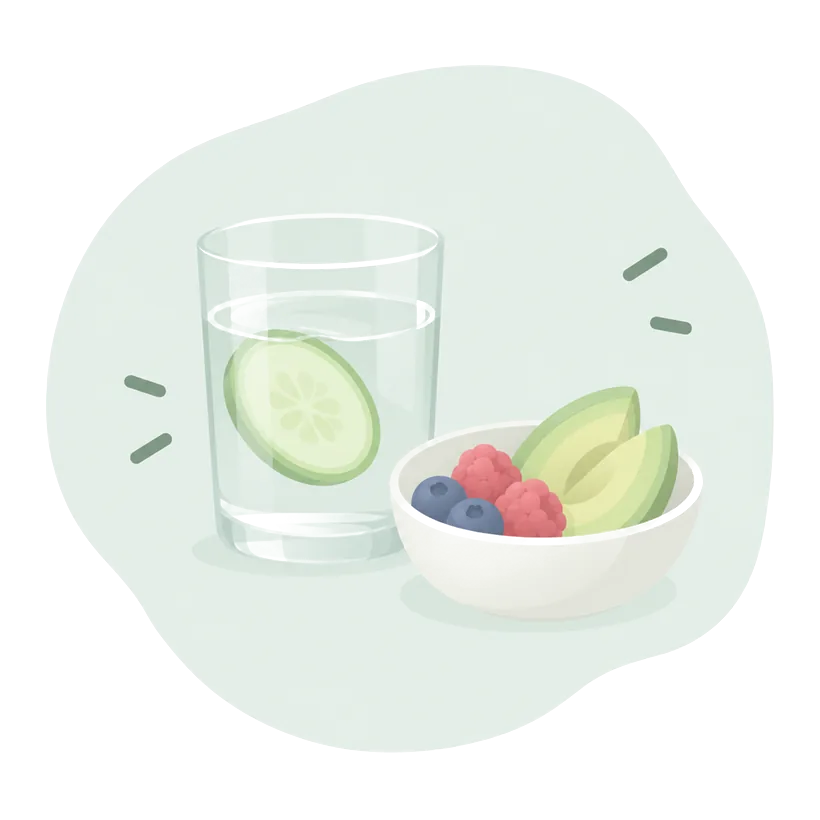
- Drink regularly throughout the day, without waiting until you’re thirsty. For many adults, about a liter and a half of water a day, on top of the water in food, is enough. Needs increase with heat and physical activity.
- Tea, herbal infusions and homemade flavored water count too.
- Limit sugary drinks and alcohol.
Helpful nutrients
A varied diet provides what your skin needs:
- Omega-3 fatty acids: oily fish, walnuts, flax and chia seeds, rapeseed oil.
- Vitamin C: citrus fruits, kiwi, bell pepper, parsley, red berries.
- Vitamin E: almonds, hazelnuts, sunflower seeds, vegetable oils.
- Zinc: shellfish, legumes, pumpkin seeds.
- Protein: eggs, fish, legumes, tofu, dairy products.
- Antioxidants: colorful fruits and vegetables, green tea, cocoa.
The idea isn’t to follow a special diet, but to add color to your plate and favor minimally processed foods.
Diet and blemishes
The link between diet and acne is still being studied. In some people, a diet rich in fast sugars or dairy products seems to be associated with more blemishes, but that isn’t true for everyone. Pay attention to your own reactions and avoid very restrictive diets. Persistent acne is a matter for a dermatologist, not a list of forbidden foods.
Dietary supplements
Collagen, biotin, beauty vitamins: the evidence remains limited for most of them. Before taking any, especially during pregnancy or alongside a treatment, ask a doctor or pharmacist for advice.
In short
- Drink regularly, without overdoing it.
- Eat a varied, colorful diet.
- Hydrate your skin with suitable care.
- See a professional if a skin problem persists.