
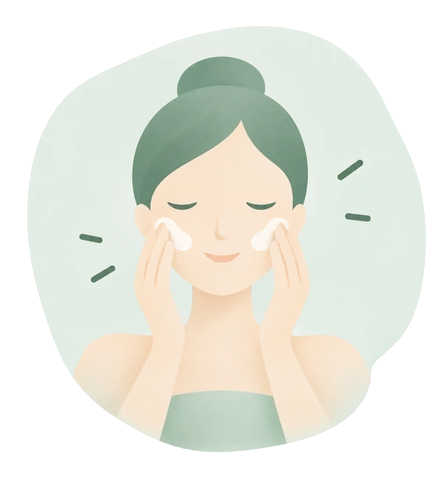
A gentle workout for your face
Your face has around forty muscles. Unlike those in the rest of the body, many attach directly to the skin: they are the ones that shape your expressions. Face yoga works them through contractions, stretches and massage, always linked to your breathing.
What you can expect
- A feeling of a more relaxed face, especially around the forehead and jaw.
- Better awareness of your expressions: you notice a frown or clenched teeth more quickly.
- A pause that supports circulation and often leaves a fresher complexion after the session.
Effects vary from person to person and take consistency. Face yoga does not replace skincare, sun protection or a professional’s advice.
The golden rules
- Clean hands, clean skin. Wash your hands before every session.
- Gentle pressure. The skin on your face is thin: you glide, you don’t pull.
- Relaxed forehead. During the exercises, check that your forehead stays smooth, except when it’s the one you’re working. A mirror helps a lot at the beginning.
- Flowing breath. Breathe in through your nose, breathe out slowly. Never hold your breath during a hold.
- Never any pain. A feeling of effort is normal, pain is not. Stop if something bothers you.
When to avoid or adapt
- Irritated skin, lesions, inflammatory acne flare-up: avoid massaging these areas.
- Jaw or neck pain: reduce the range of your movements and ask a health professional for advice if it persists.
- After a cosmetic procedure (injections, laser, peel): wait for your practitioner’s approval.
- Pregnancy: gentle exercises are generally still possible; if in doubt, talk to your doctor or midwife.
Getting started
Start with beginner-level sessions of three to five minutes, at a set time in your day: when you wake up, after brushing your teeth or before bed. Five minutes every day beats an hour on Sunday. After a few weeks, add intermediate sessions, then advanced ones for the areas you care about most.