The face, a mirror of tension
Under stress or when concentrating, many people clench their teeth, frown or tighten their mouth without realizing it. These repeated contractions tire the jaw muscles and can feed headaches, neck tension and a face that looks closed off.
Signs to watch for
- You catch yourself with clenched teeth in front of your screen.
- Your jaw is sore or tired when you wake up.
- You hear clicking when you open your mouth.
- The muscles at the angle of your jaw, the masseters, are tender to the touch.
- Someone has already told you that you grind your teeth at night.
The resting position
At rest, your teeth shouldn't touch. Remember this position: lips together, teeth apart, tongue resting against the roof of your mouth. Check it several times a day, for example at every notification or every red light.
Gestures that help
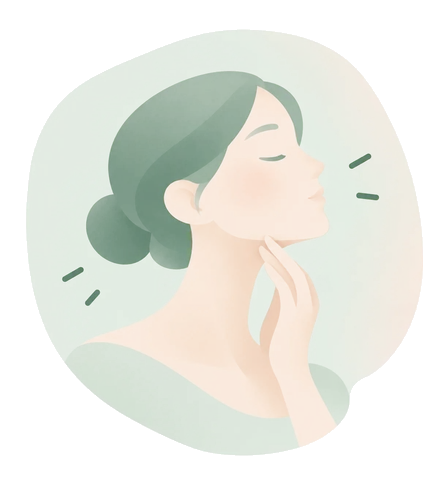
- Massage the masseters in small circles, mouth slightly open.
- Yawn on purpose to stretch the jaw, then close it slowly.
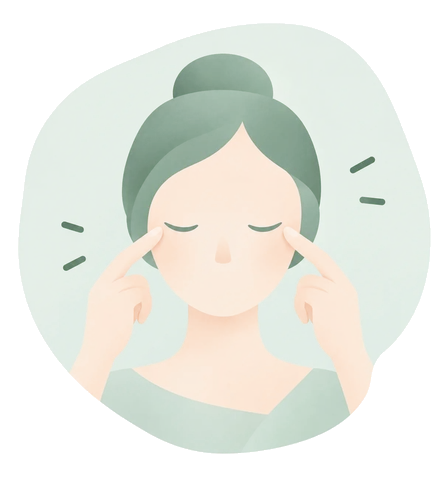
- Massage the temples, where other chewing muscles are located.
- Lengthen your exhale: breathing in for four counts and out for six helps your body calm down.
- Relax your neck and shoulders, which are often tense at the same time as the jaw.

In the app
The “Mâchoire relâchée” and “Massage des masséters” sessions walk you through these gestures step by step.
Day to day
- Limit chewing gum and very hard foods if your jaw is sensitive.
- Take regular breaks during long stretches of concentration.
- Move: walking and exercise help release tension.
- Look after your sleep, because teeth grinding at night is often linked to stress.
When to see someone
Persistent pain, a jaw that locks, difficulty opening your mouth, frequent headaches, teeth that wear down: talk to your dentist or your doctor. A mouthguard, physiotherapy sessions or stress support may be offered to you. Face yoga is a complement, never a substitute for medical advice.