The bent neck, a modern posture
Phone, laptop, reading: we spend hours with our head tilted forward. The further the head moves forward, the harder the nape has to work to hold it up. Over time, this posture keeps tension going in the upper back and nape, can make the horizontal lines on the neck more visible and give a less defined chin.
The signs
- From the side, your ears sit in front of your shoulders.
- Your shoulders roll forward.
- Your nape feels stiff at the end of the day.
- You lower your head to your phone instead of raising the screen.
Simple adjustments
- Computer screen at eye level, an arm’s length away. For a laptop, a stand or a pile of books and a separate keyboard are enough.
- Phone raised to face height rather than resting on your lap.
- Chair: feet flat, back supported, hips slightly higher than your knees.
- Breaks: every thirty to sixty minutes, stand up and move for a few moments.
Exercises that help
- The chin tuck: draw your chin straight back, as if a string were pulling the top of your skull upward. Hold for three seconds, then release. About ten times a day.
- The shoulder blade squeeze: bring them back and down toward each other, chest open.
- Side stretches for the neck, gentle and without jerking.
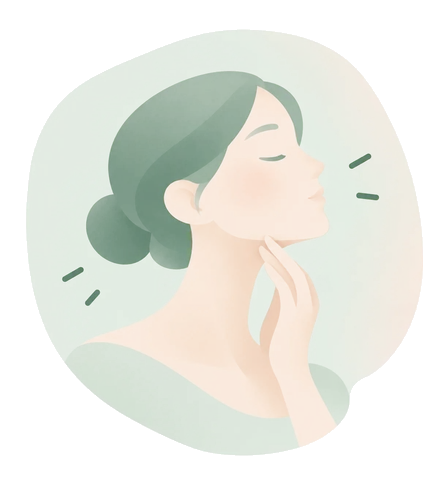
- The front of the neck: with your head tilted slightly back, push your lower lip forward to feel the neck muscles working.
In the app
The “Port de tête”, “Nuque libérée” and “Cou allongé” sessions chain these movements together.
What about the skin on your neck?
The skin on the neck is thin and often forgotten. Extend your skincare down to your décolleté, and above all your sunscreen: the neck is very exposed to the sun.
When to see a professional
Pain that runs down into your arms, tingling, frequent headaches, stiffness that won’t go away: talk to your doctor or a physiotherapist. The exercises in the app are wellness gestures, not a treatment.