At night, your body recovers
During sleep, many renewal processes are more active and the body recovers. After a night that's too short, you often notice a duller complexion, more pronounced dark circles and puffy eyelids. Once in a while, it's nothing serious; but repeated lack of sleep eventually shows on your face.
Habits that help
- Regular hours: going to bed and getting up at the same time supports your internal clock.
- Seven to nine hours of sleep, which suits most adults.
- Screens off at least thirty minutes before bed: light and stimulating content delay falling asleep.
- A cool, dark and quiet bedroom.
- No coffee after early afternoon, and little alcohol in the evening: they fragment your sleep.
- A soothing ritual: skincare routine, face massage, a few minutes of slow breathing. The app's 4-7-8 breathing is designed for this moment.
Sleeping position and pillowcase
- On your back, your face doesn't rub against the pillow. It isn't always easy to get used to: don't force it if it ruins your sleep.
- Head slightly raised if you often wake up with puffy eyes.
- A clean pillowcase: change it once or twice a week, especially if your skin is prone to blemishes.
- A silk or satin pillowcase is gentler on skin and hair; it's a comfort, not a must.
In the morning, after a short night
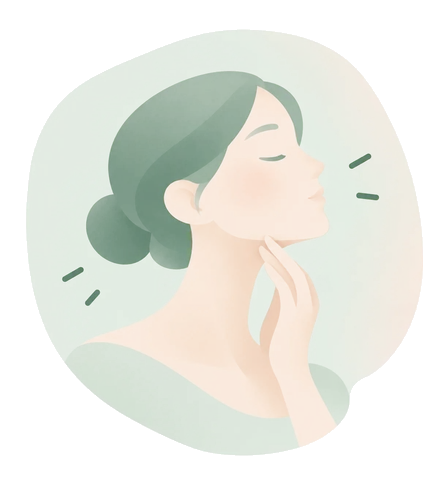
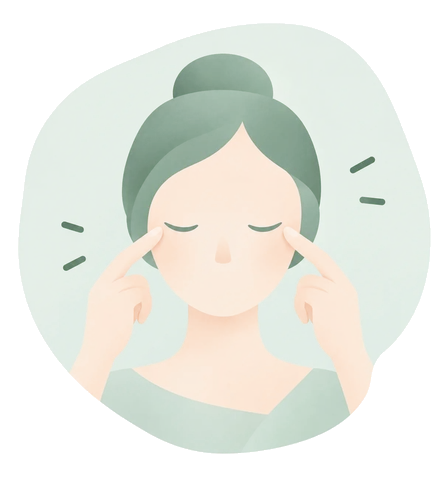
- Gentle drainage around the eyes and neck.
- Spoons chilled in the fridge, placed on puffy eyelids.
- A caffeine eye-contour treatment.
- A big glass of water, breakfast, and natural light to wake your body up.
When to talk to a doctor
Heavy snoring, frequent waking, fatigue that lingers despite full nights, trouble falling asleep for several weeks: talk to your doctor. A sleep disorder can be treated, and your skin will benefit too.