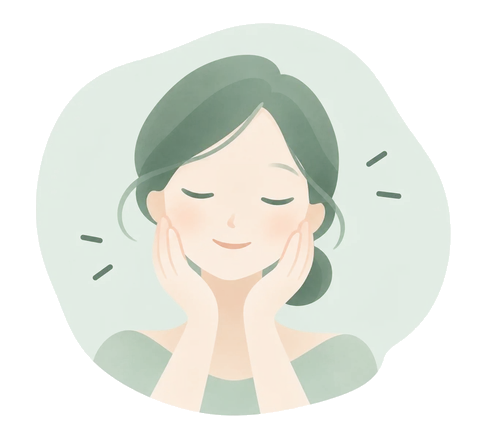
Face yoga doesn’t treat the face as one block. Each zone has its own skin, its own muscles and its own habits: a forehead that creases in front of the screen, a jaw that clenches under stress, a neck that gets forgotten. Knowing these six zones helps you pick the right move for the right place.
The map of the six zones
The zones respond to one another: relaxing the jaw often softens the cheeks, and a more supple neck makes it easier to drain the jawline. That is why a routine alternates zones instead of repeating the same exercise.
The upper face: forehead and eyes
The forehead
The forehead tenses up without you noticing, especially in front of a screen. Here, the goal is mostly to release: fingertip smoothing strokes from the center out toward the temples, and a few slow breaths with a relaxed forehead.
The eye area
It’s the thinnest skin on the face, so the movements here are light: gentle tapping with your ring finger, soft pressure toward the temples, the coolness of a spoon taken out of the fridge in the morning. Never pull on the skin, and keep oils away from the lashes.
The middle of the face: cheeks and mouth
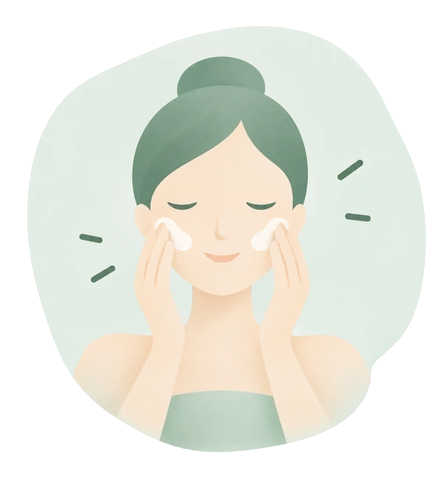
The cheeks respond well to face yoga exercises (puffing them out, smiling while lifting the cheekbones) and to massages that wake up your complexion. Around the mouth, targeted movements loosen an area that works hard for speech and expressions.
- Cheekbones: smile with your mouth closed, lifting your cheeks toward your eyes, for five seconds.
- Cheeks: slowly move the air from one cheek to the other, ten times.
- Lips: a relaxed “O”, then a wide smile, taking turns.
The lower face: jawline, jaw and neck
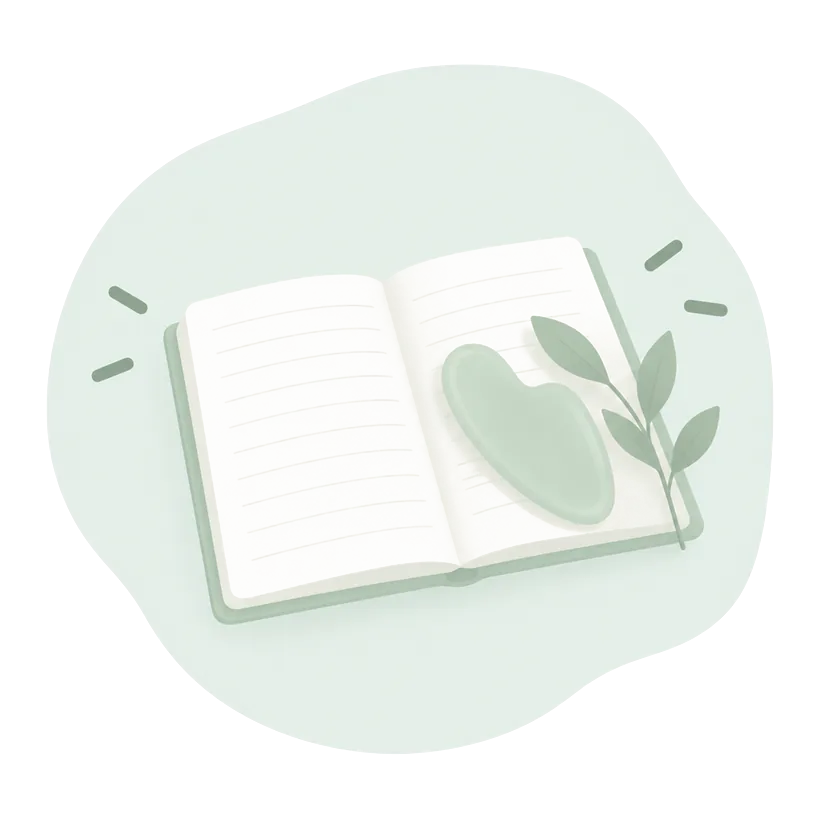
The jaw is often the most tense area: we clench our teeth when concentrating or during the night. Massaging the masseters, gua sha along the jawline and neck stretches make a trio that complements itself well. The neck, so often forgotten, deserves the same care as the face.
In the app
The sessions “Front détendu express”, “Mâchoire relâchée” and “Cou allongé” guide you through these moves step by step.